NexaGPU NexaGPU

OEM/ODM Enterprise Storage Manufacturer & Suppliers

High-Density AI GPU Servers, Tailored Storage Fabrics, and Next-Generation Data Center Infrastructures Built to Fuel Modern High-Performance Computing Workloads.

The Global Paradigm Shift in Enterprise Storage Architecture

In an era defined by hyper-scale data processing, generative AI models, and real-time analytical loops, enterprise storage has transcended its traditional role as a simple repository of record. It has evolved into a key driver of performance. The rapid adoption of Large Language Models (LLMs), such as DeepSeek, GPT architectures, and massive agentic workflows, has shifted the storage bottleneck from simple capacity constraints to extreme transactional throughput and microsecond latency limits.

Modern data centers are phasing out legacy architectures in favor of highly optimized flash arrays powered by non-volatile memory express (NVMe) over Fabrics (NVMe-oF). With PCIe Gen 5.0 and the looming deployment of PCIe Gen 6.0, standard controllers can no longer maximize the potential of SSD flash performance. This development has triggered a surge in demand for specialized OEM/ODM Enterprise Storage solutions. Storage hardware must now be custom-tailored, structurally reinforced, and thermally tuned to survive alongside massive configurations of high-density GPU accelerators.

11+
Years Industry Expertise
$12M
Annual Export Revenue
120+
Dedicated R&D Engineers
850+
Supply Chain Partners

Key Macro Trends Shaping the Storage Industry

  • The Rise of GPUDirect Storage (GDS): By enabling a direct DMA path between GPU memory and local NVMe storage, GDS bypasses system CPU and RAM bottlenecks. This cuts storage latencies down to minimal levels and frees up valuable compute cycles.
  • EDSFF Form Factors: E1.S and E3.S form factors are rapidly replacing classic 2.5-inch U.2/U.3 drives. These new form factors offer improved thermal cooling efficiency, higher physical slot densities, and robust electrical properties optimized for PCIe Gen 5.0 and beyond.
  • CXL (Compute Express Link): Memory pooling over CXL bridges the gap between memory and fast storage, creating a unified address space that allows host CPUs and accelerated nodes to share pools of low-latency DRAM and persistent storage.

OEM/ODM Customization: Tailoring Infrastructure to Target Workloads

Off-the-shelf storage platforms often fail to balance read/write capabilities for mixed enterprise workloads. For example, database transactions need high IOPS and low-latency random writes, while AI model training requires rapid, sustained sequential reads of massive data lakes. Through custom OEM/ODM pipelines, enterprises can select specific RAID controllers, select optimized drive backplanes, integrate liquid-cooling loops, and adjust BIOS profiles. This level of customization ensures hardware is optimized to deliver peak performance under continuous duty cycles.
Next-Gen Storage Architecture & R&D Roadmap

Our dedicated engineering teams continually refine hardware designs to support future network speeds, high thermal limits, and deep system stability.

Direct Storage Over Fabrics

Integrating hardware solutions that support RoCE v2 and InfiniBand, enabling low-overhead remote direct memory access (RDMA) over modern fabrics.

CXL-Shared Memory Pools

Leveraging Compute Express Link technology to pool compute resources and memory. This significantly reduces data latency when transferring data between components.

Smart NIC & DPU Offloads

Moving storage protocol stack operations (NVMe, virtualization, RAID encryption) to high-speed DPUs to reclaim core host CPU power.

Targeted Enterprise Solutions

Optimized system configurations built to handle demanding enterprise use cases.

AI & High-Performance Computing (HPC)

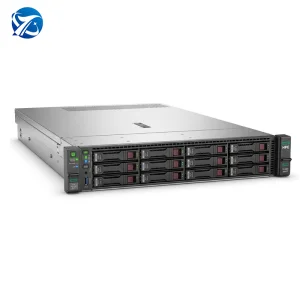
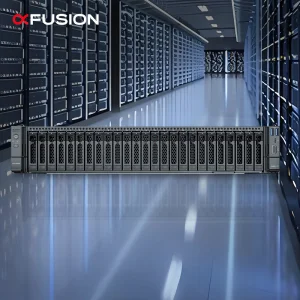
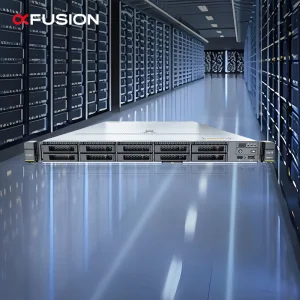
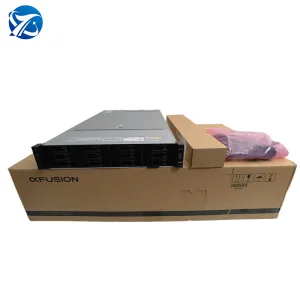
AI training workloads demand high throughput to keep GPU compute nodes operating efficiently. Our custom storage servers support up to 24 U.2/U.3 NVMe drives per node, providing the high sequential bandwidth required to run intensive AI training pipelines.

High-Density Hyper-Convergence (HCI)

By integrating computing resources and software-defined storage (SDS) into a compact chassis, our custom-engineered servers simplify hybrid cloud deployments. This unified design helps reduce operational overhead while scaling compute power and storage capacity in lockstep.

Edge Telemetry & Remote Offices

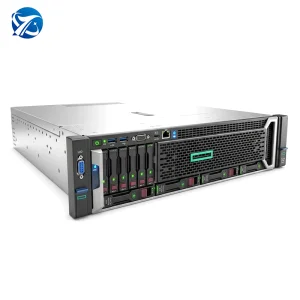
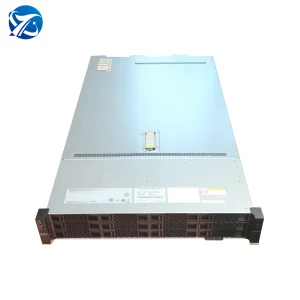
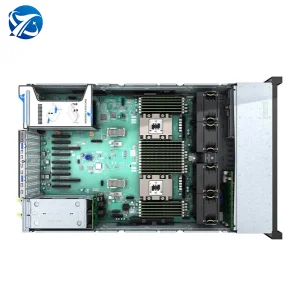
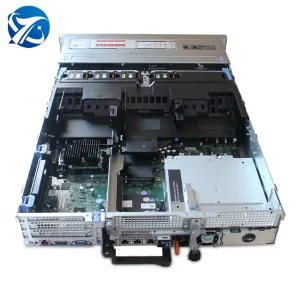
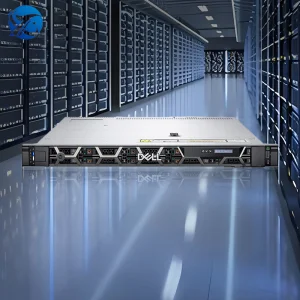
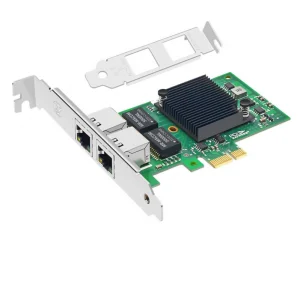
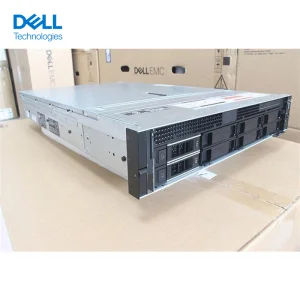
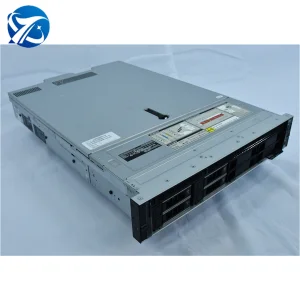
Data generation is increasingly moving to the network edge. Our compact 1U and 2U form factor systems are designed to operate reliably in challenging branch office and edge environments. They feature PCIe boot cards, hardware RAID arrays, and robust remote out-of-band management tools.

Engineering Excellence & Strict Quality Assurance

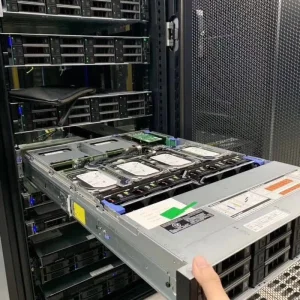
At NexaGPU, quality is the cornerstone of our engineering philosophy. Our modern, specialized facility is equipped with dedicated automated testing lanes, high-temperature thermal testing chambers, and vibration stress-test tables. This equipment allows us to validate server configurations under sustained high-load workloads.

Our dedicated team of 45 quality assurance specialists supervises a multi-stage testing process. This includes incoming raw components testing, comprehensive pre-assembly component testing, post-assembly system diagnostics, and intensive physical stress tests. This approach ensures high reliability and helps minimize early hardware failures.

With 11 years of industry experience, we maintain a reliable supply network of over 850 partners. This ensures a stable supply of chips, high-speed printed circuit boards, server chassis, and advanced cooling components.

100%

Full-System Stress Tests

Every server undergoes a 72-hour thermal stress test prior to packaging.

45

QC Engineers

Monitoring system assembly, testing runs, and validation steps.

85+

Annual Platform Releases

Designing custom server options to support evolving business requirements.

320㎡

Lab Space

Dedicated facility focused on thermal characterization and stress testing.

Technical FAQ: Custom Enterprise Storage & OEM/ODM Pipelines

Answers to common technical and configuration questions regarding our custom hardware pipelines.

What defines the boundary between OEM and ODM services in enterprise storage?
OEM (Original Equipment Manufacturing) involves manufacturing storage hardware using the client’s existing designs and specifications. ODM (Original Design Manufacturing) covers the full product lifecycle: our engineering teams design, validate, and manufacture custom hardware configurations based on the client's performance requirements and thermal profiles.
How does GPUDirect Storage (GDS) improve performance in custom AI storage servers?
GPUDirect Storage (GDS) establishes a direct DMA link between local NVMe storage and GPU memory. By bypassing the CPU-bounced memory buffers and reducing system interrupts, GDS significantly increases system throughput and lowers end-to-end data latency.
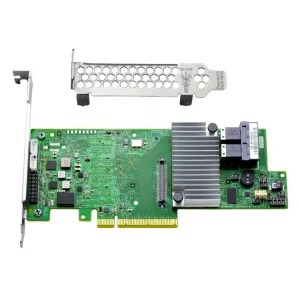
How do hardware RAID controllers like the LSI 9560-16i improve reliability?
Hardware RAID controllers like the LSI 9560-16i feature dedicated onboard processors and cache memory. This offloads RAID parity calculations from the host CPU and improves read/write operations. When paired with a battery backup or cache protection module, these controllers help protect data in the event of unexpected power losses.
What thermal dissipation systems does NexaGPU implement for 1U and 2U high-density server layouts?
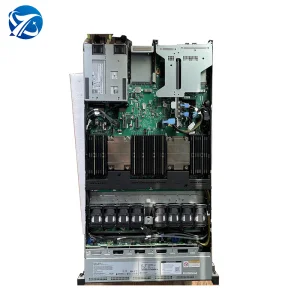
For high-density systems, we use heavy-duty counter-rotating fans, tailored internal air ducts, and custom heatsinks. For dense computational deployments, we can configure liquid-cooling systems (such as direct-to-chip plates or closed-loop cooling blocks) to maintain components within safe operating temperatures.
How does NexaGPU manage its global supply chain to maintain consistent hardware availability?
We work closely with over 850 verified supply chain partners, including chip manufacturers, board makers, and chassis suppliers. This broad network, along with our strategic inventory buffers, helps us maintain stable production timelines and reliable delivery schedules.